

Tourism in Bhutan began in 1974. It was introduced with the primary objective of generating revenue, mainly foreign exchange, publicizing the country’s unique culture and traditions to the outside world, and contributing to the country’s socio-economic development. The royal government has always been aware that an unrestricted influx of tourists can negatively affect Bhutan’s pristine environment and its rich and unique culture. The government, therefore, adopted a policy of “high-value low volume” tourism, controlling the type and quantity of tourism right from the start.

The government privatized tourism in October 1991 to encourage private-sector participation. There is no quota or limit on the number of tourists allowed to visit Bhutan. Instead, the volume of tourists coming to the country has been constrained by the capacity constraints of tourism infrastructure. Today, the policy has been revised to “high value-low impact.” Bhutan offers a rare experience—where spirituality, nature, and tradition remain untouched by mass tourism. The tourism industry has made significant contributions to the country’s socio-economic development, especially after its privatization in 1991.
If you are planning a trip from Kathmandu, Nepal, or anywhere else, this complete guide will walk you through everything: cost, visa process, best time to visit, and a perfect itinerary.
Where is Bhutan Located?
Bhutan is a small, landlocked country nestled in the Eastern Himalayas of South Asia. It shares its borders with India to the south, east, and west, while China lies to the north across the high Himalayan ranges. Despite its relatively small size, Bhutan features dramatic landscapes—from subtropical plains in the south to snow-capped mountains in the north.
Geographically, Bhutan sits close to the world’s highest mountain region, including areas near Mount Everest. However, unlike Nepal’s open trekking culture, Bhutan has adopted a more controlled and sustainable approach to tourism. This distinction is important for travelers: while neighboring Himalayan destinations focus on volume tourism, Bhutan prioritizes quality and preservation.
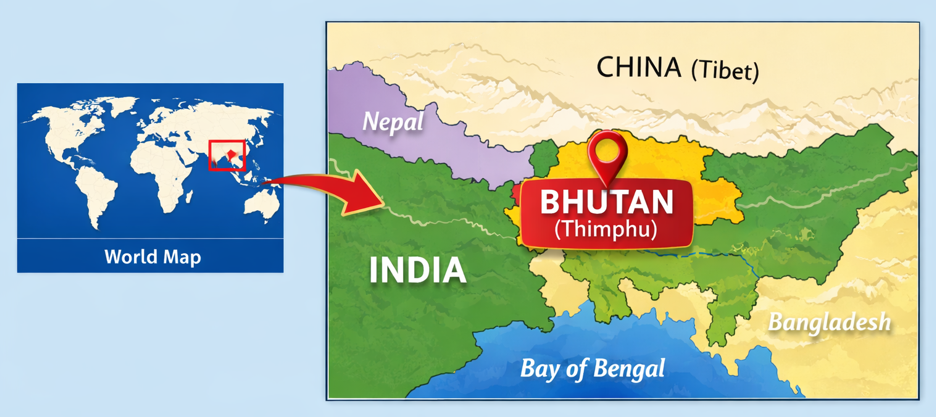
The country’s location in the Eastern Himalayas gives it a unique ecological diversity. Dense forests, deep valleys, and fast-flowing rivers dominate the landscape, making Bhutan one of the few carbon-negative countries in the world. This natural setting plays a major role in shaping its tourism experience—visitors are not just sightseeing, but entering a carefully protected environment.
Why Tourism in Bhutan is Unique
Tourism in Bhutan stands out because of its “High Value, Low Impact” approach. The country carefully manages visitor numbers to protect its environment, culture, and traditions—resulting in fewer crowds, cleaner surroundings, and a more authentic travel experience.
- High Value, Low Impact Tourism
- Gross National Happiness
Bhutan limits the number of tourists to protect its culture and environment. This ensures less crowd, a cleaner environment, and an authentic travel experience. Unlike most countries, Bhutan measures success through happiness rather than GDP. This philosophy is reflected in daily life, making travel here peaceful and meaningful.
Bhutan Tourism Policy
Bhutan follows a government-regulated tourism policy designed to protect its culture, environment, and traditions. Visitors are required to book through licensed operators and pay a Sustainable Development Fee, ensuring controlled and responsible tourism. This “High Value, Low Impact” approach helps preserve Bhutan’s identity while offering an exclusive travel experience.
1. Sustainable Development Fee (SDF)
- Tourists pay a daily fee (updated regularly)
- Supports healthcare, education, and sustainability
2. Guided Travel
- Most international tourists must book through licensed tour operators
- A guide is included in your package
This system ensures quality tourism rather than mass tourism.Best Places to Visit in Bhutan
Bhutan offers a range of stunning destinations that showcase its culture, nature, and spirituality.
Popular places include Paro, Thimphu, Punakha, and Bumthang, each known for its unique landscapes and historic sites. Highlights like Taktsang Monastery (Tiger’s Nest) make Bhutan one of the most unforgettable travel experiences in the Himalayas.
- Paro: Home to Bhutan’s only international airport and the starting point for most trips.
- Thimphu: Unique capital with no traffic lights and a mix of modern and traditional lifestyles.
- Punakha: Famous for Punakha Dzong, beautiful rivers, and landscapes.
- Tiger’s Nest Monastery: Bhutan’s most iconic landmark and a cliffside monastery with breathtaking views.
Best Time to Visit in Bhutan
Bhutan is located in the Eastern Himalayas, bordered by Tibet in the north and India on the other sides. The country has distinct seasons—monsoon (June–September) brings heavy rain and clouds, while autumn (October–November) offers clear skies and great Himalayan views. Spring (March–May) is also popular, with blooming flowers and excellent mountain visibility.
| Month | Jan | Feb | Mar | Apr | May | Jun | Jul | Aug | Sep | Oct | Nov | Dec |
|---|---|---|---|---|---|---|---|---|---|---|---|---|
| Min Temp °C | -17 | -15 | -10 | -5 | -1 | 3 | 5 | 4 | 2 | -5 | -12 | -16 |
| Max Temp °C | 1 | 1 | 4 | 7 | 10 | 12 | 12 | 13 | 11 | 8 | 5 | 3 |
| Rainfall (mm) | 4 | 8 | 16 | 21 | 24 | 40 | 75 | 72 | 34 | 14 | 4 | 1 |
Spring (March–May): Clear skies, blooming flowers, and ideal for sightseeing and photography.
Autumn (September–November): Best weather and Popular festivals like Paro Tshechu.
Avoid the monsoon season (June–August) for a better travel experience.Bhutan Visa & Entry Requirements
All tourists (except those from India, Bangladesh, and the Maldives) must obtain a visa before traveling to Bhutan. The application is processed online through a licensed Bhutanese tour operator via the Department of Immigration system, using a scanned copy of the passport and passport-sized photographs.
Once the Sustainable Development Fee (SDF; USD 100 per person per night), visa fee (USD 40), and tour payment have been processed, the visa is usually approved within a few working days, and an electronic evisa letter is issued.
Upon arrival in Bhutan, travelers must present their visa papers, and their visas are officially stamped in their passports at the port of entry under Bhutan’s “High Value, Low Impact” tourism policy.
To apply for a visa online, you will need:
- A digital copy of a valid passport
- A recent digital passport photo
- Flight Tickets (arrival and departure dates)
Cost of Tourism in Bhutan
Tourism in Bhutan follows a structured cost system designed to support sustainable and controlled travel. The main expense is the Sustainable Development Fee (SDF), charged per person per night, along with an all-inclusive tour package covering hotels (minimum 3-star category), guide services, transport, and meals. Flights are mainly operated between Kathmandu and Paro by Druk Air and Bhutan Airlines. Bhutan is not a budget destination, but it offers premium value through high-quality services, untouched nature, and an exclusive travel experience.
| Cost Component | Details | Approx. Cost (USD) |
|---|---|---|
| International Flights | Kathmandu / Delhi / Bangkok → Paro (Round Trip) | $500 – $1,500 |
| Sustainable Development Fee (SDF) | Government Fee Per Person Per Night | $100 |
| Visa Fee | Processing Visa for Bhutan | $40 |
| Accommodation | 3 to 5 Star Hotels Per Night | $50 – $400+ |
| Meals | Breakfast, Lunch, Dinner | Included / $20 – $50 if separate |
| Transport | Private Vehicle + Driver Per Day | Included / $50 – $150 |
| Guide Service | Licensed Bhutanese Guide (English Speaking) | Included / $50 – $80 per day if extra language |
| Entry Fees & Permits | Monasteries, Dzongs, Museums | Included in Package |
| Personal Expenses | Shopping, Tips, Drinks | $100 – $300 |
How to Travel in Bhutan
Getting into Bhutan is easier than you may think; the most common entry point is from Kathmandu, Nepal. The reasons why most travelers choose Kathmandu are:
- There are daily direct flights from Kathmandu to Paro (Bhutan) on Druk Air, the national airline of Bhutan, and several weekly flights on Bhutan Airlines. Because most travelers consider Kathmandu as their entry port to Paro, the trip to Paro is comparatively cheaper.
- Flying this route is a lifetime experience you will never forget. You will be rewarded with a magnificent view of 8 of the highest peaks on Earth, including Mt Everest, cascading ranges, hundreds of other peaks, mountain valleys, pastureland, lakes, and soft mountains towards the eastern ranges of the Himalayas.
- Secure and faster visa processing without 100% down payment in advance through our Nepal Bhutan travel agency, unlike most of the Bhutan travel agencies, which will ask for 100% package payment in advance due to their government policies.
- “Kill two birds with one stone.” Over 95% tourist who make Kathmandu their transit point to travel to Paro, Bhutan, also have the opportunity to see the country “Nepal” at the same time.
However, Bhutan can also be entered by direct flights from Delhi, Kolkata, Mumbai, Dhaka, Bangkok, Dubai, and Singapore Changi Airport (as well as a few other smaller cities in India). It is also possible to drive into Bhutan from India (via the Phuentsholing Border), but the flight is the most common and stress-free way to enter the country.
Bhutan Tour Itinerary
If you have limited time, this 5-day itinerary is ideal to explore the highlights of Bhutan. It covers the culture of Thimphu, the scenic beauty of Punakha, and the iconic hike to Tiger’s Nest Monastery in Paro. This plan offers a perfect mix of culture, nature, and short adventures, making it suitable for first-time travelers.
| Day | Plan | Highlights |
|---|---|---|
| Day 1 | Arrival in Paro → Thimphu | Airport pickup, scenic drive to Thimphu |
| Day 2 | Thimphu Sightseeing | Transfer to the airport |
| Day 3 | Punakha Excursion | Buddha Dordenma, Memorial Chorten, and local markets |
| Day 4 | Paro + Hike | Hike to Tiger’s Nest Monastery |
| Day 5 | Departure | Transfer to airport |
If you are looking for an itinerary shorter or longer than 5 days, please check the options below:
- 3 Days – Short Cultural Tour
- 4 Days – Cultural Discovery Tour
- 5 Days – Classic Bhutan Tour
- 6 Days – Cultural & Scenic Tour
- 7 Days – Cultural & Adventure Tour
- 8 Days – Complete Bhutan Experience
Travel Tips For Bhutan
Before traveling to Bhutan, it’s important to be well prepared, as the country has a unique tourism system and a strong cultural identity. These simple tips will help you enjoy a smooth and meaningful journey:
- Carry Passport Copies: Keep both digital and printed copies of your passport and visa clearance for checkpoints.
- Dress Modestly: Respect local culture by wearing conservative clothing, especially when visiting monasteries and dzongs.
- Carry Cash: Credit cards are not widely accepted in many parts of Bhutan, so it’s best to carry enough cash for your daily expenses. Indian Rupees (INR) are widely accepted in Bhutan, and the Bhutanese currency (Ngultrum) is pegged to the Indian Rupee (1 BTN = 1 INR).
- Book in Advance: Tourism is regulated, and visitor numbers are limited, so early booking is highly recommended.
- Prepare for Light Hiking & Altitude: Some attractions, such as Tiger’s Nest Monastery, involve hiking and moderate altitudes.
- Acclimatize Properly: Bhutan has varying altitudes. Take it slow during the first 1–2 days to avoid altitude discomfort, especially in Paro and Thimphu.
- Limited Internet Access: Wi-Fi and mobile data can be slow or restricted in remote areas. Download maps and important documents in advance.
- Follow Road Travel Time: Distances look short on the map, but winding mountain roads mean longer travel times between destinations.
- Respect Local Customs: Always walk clockwise around stupas, monasteries, and prayer wheels, and ask before taking photos of people or religious sites.
- Try Local Food: Don’t miss dishes like Ema Datshi (chili cheese stew), red rice, and butter tea for an authentic experience.
- Pack Layered Clothing: Weather can change quickly, especially in higher elevations; mornings and evenings can be quite cold.
- Follow Strict Rules: Smoking in public areas is restricted in Bhutan, and littering is taken very seriously.
Is Bhutan Worth Visiting?
Bhutan is a great destination for cultural travelers who want to experience rich traditions and ancient monasteries. It is also perfect for nature lovers because of its stunning mountains, clean environment, and peaceful landscapes. Luxury and meaningful travel seekers will enjoy its well-managed tourism system and calm atmosphere. However, Bhutan is not ideal for budget backpackers because travel costs are generally higher. It is also not suitable for nightlife-focused travelers since the country offers very limited nightlife options. If you want a peaceful and unique Himalayan experience, Bhutan is absolutely worth visiting. Overall, Bhutan is best for travelers who value culture, nature, and serenity over nightlife and budget travel.
Bhutan vs Nepal Tourism
| Feature | Bhutan | Nepal |
|---|---|---|
| Tourism Style | Controlled | Open |
| Cost | High | Budget-Friendly |
| Experience | Cultural & Premium | Adventure & Trekking |
| Crowds | Low | Moderate-High |
Tourism in Bhutan Related FAQs
Yes, all international tourists (except citizens of India, Bangladesh, and the Maldives) need a visa, which must be arranged through a licensed tour operator. The visa fee for foreigners is USD 40.
Bhutan follows a “High Value, Low Impact” tourism policy, which includes a daily Sustainable Development Fee (SDF), as well as accommodation, a guide, and transport in one package.
Most packages include flights (Kathmandu-Paro-Kathmandu), accommodation (minimum 3-star category), meals, a licensed guide, private transport, and entry permits for tourist sites.
The best time to visit Bhutan is during spring (March to May) and autumn (September to November). Spring offers beautiful blooming rhododendrons and clear mountain views, while autumn is ideal for trekking and experiencing colorful festivals like Tshechu. Winter (December to February) is colder but less crowded, offering clear skies, while the monsoon season (June to August) brings heavy rainfall and is less favorable for travel.
Yes, Bhutan is one of the safest travel destinations in the world. It has a very low crime rate and a peaceful, friendly society. Tourists are required to travel with licensed guides, which adds an extra layer of safety and support. The country is politically stable, and the government places strong emphasis on visitors’ well-being. However, as with any mountain destination, travelers should still take standard precautions, especially when trekking or traveling at high altitudes.
Final Thoughts
Tourism in Bhutan offers a unique experience unlike anywhere else in the world. It is not just a vacation, but a meaningful journey into culture, tradition, and spirituality. The country’s stunning landscapes and peaceful environment make the experience truly unforgettable. Bhutan encourages slow and responsible travel, helping visitors connect more deeply with nature and local life.
Overall, it is a destination that leaves a lasting impression on every traveler.


